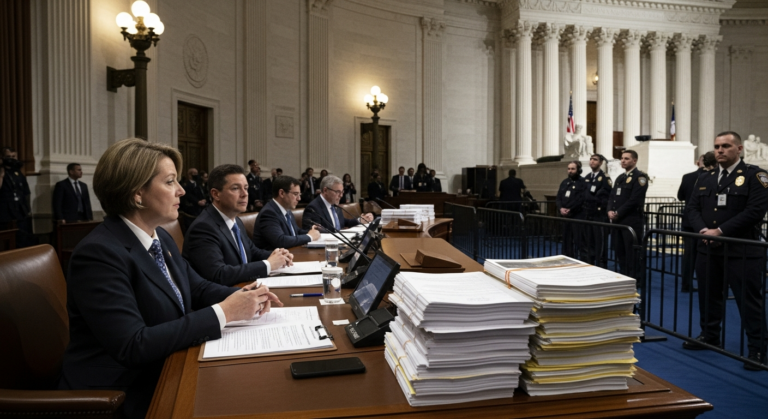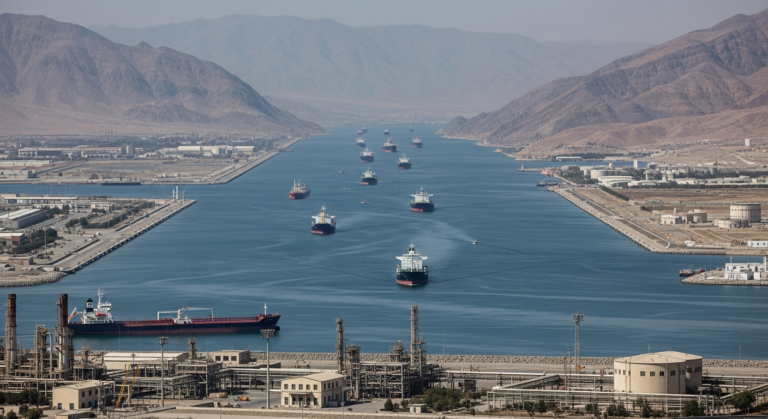
U.S. and Iranian officials have outlined an initial framework aimed at halting hostilities and resuming traffic through the strategically vital Strait of Hormuz. This development, which is expected to culminate in a signing ceremony scheduled for Friday in Switzerland, has drawn attention not only for its geopolitical ramifications but also for its potential impact on energy markets, including those in Greenville.
The Strait of Hormuz is a critical chokepoint for global oil shipments, with approximately 20% of the world’s petroleum passing through its waters. The current discussions, mediated by international representatives, have not fully resolved the ongoing disputes, with public details regarding the reopening of the strait remaining unclear. This uncertainty has implications for U.S. foreign policy and energy security, particularly as fuel prices fluctuate in response to geopolitical tensions.
In Greenville, the ramifications of this deal could resonate through local industries reliant on stable energy prices. Major employers in the area, such as Michelin North America and BMW Manufacturing Co., are sensitive to changes in fuel costs, which can impact operational expenses and, ultimately, consumer prices. As international negotiations unfold, local businesses are closely monitoring developments, recognizing that shifts in energy policy can have direct consequences on their bottom lines.
The situation is further complicated by the intertwined nature of military risk and energy security. As the U.S. navigates its foreign policy strategies, the potential for renewed tensions in the region could lead to increased military presence or actions, which in turn may affect global oil supply chains. For Greenville, this could mean not only higher fuel prices but also a ripple effect on the economy as transportation costs rise.
The G7 nations are expected to play a pivotal role in shaping the response to the U.S.-Iran framework deal. Their collective stance on energy security and foreign policy will be crucial in determining the stability of oil markets. As discussions progress, the implications for Greenville’s energy landscape will likely become clearer, particularly as local businesses and consumers react to changes in fuel availability and pricing.
While the framework deal represents a step toward de-escalation, the path to a final agreement remains fraught with challenges. The uncertainty surrounding the reopening of the Strait of Hormuz underscores the delicate balance that must be maintained in international relations, especially concerning energy resources. As Greenville continues to grow as a hub for manufacturing and commerce, the local economy will remain sensitive to these global dynamics.
In conclusion, the U.S.-Iran framework deal is not just a matter of international diplomacy; it has tangible implications for communities like Greenville. As energy security remains a priority, the local economy’s resilience will be tested in the face of evolving geopolitical landscapes.