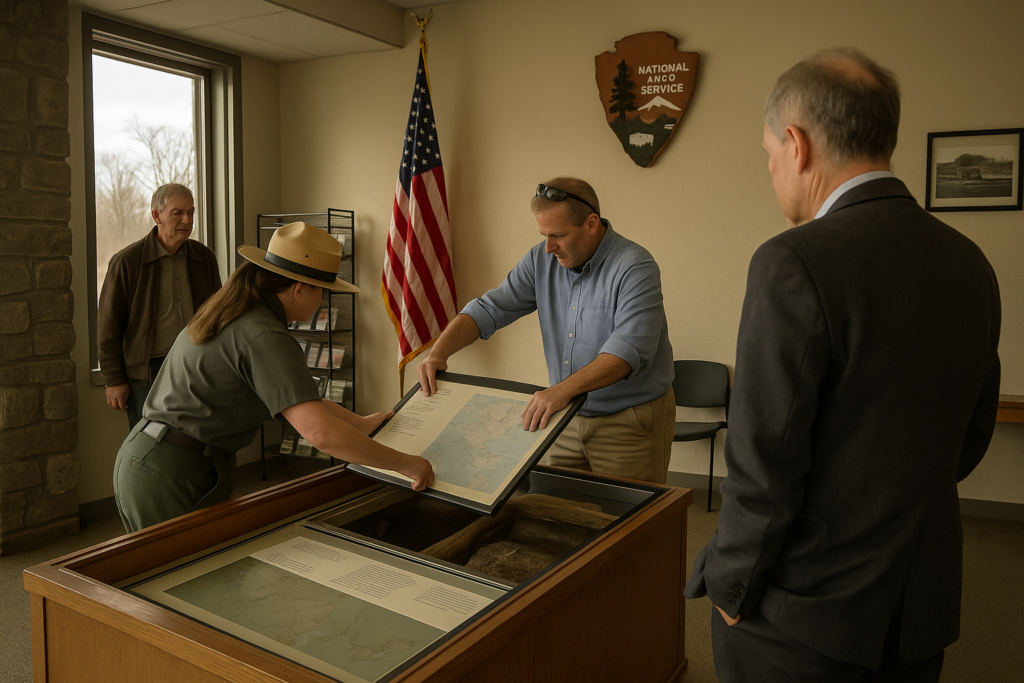
A federal judge has issued a ruling requiring the restoration of exhibits and signs that were changed at national museums, parks, and landmarks. This decision comes in response to alterations made under an executive order that sought to address the content presented at public history sites. The ruling mandates that the government provide weekly status reports on the progress of the restoration efforts.
The case highlights the ongoing debates surrounding public history and the interpretation of historical narratives at federally managed sites. The executive order, which prompted these changes, faced criticism for potentially sanitizing or altering historical facts to fit a particular narrative. The judge’s ruling is seen as a significant step in ensuring that the integrity of public history is maintained across national sites.
While the ruling is a national issue, it raises questions about how similar policies might affect local sites in Greenville. The National Park Service oversees several important sites that could be impacted by federal directives. Although none are directly mentioned in the ruling, the implications for local museums and parks are noteworthy.
In Greenville, the community has a vested interest in the preservation of historical narratives, particularly at sites like the Upcountry History Museum and the nearby parks along the Reedy River. These venues play a crucial role in educating the public about the region’s history and culture. The federal ruling may prompt local officials to review their own exhibits and ensure they align with the broader standards set by the court.
As the government begins to implement the judge’s order, it will be essential to monitor how these changes unfold. The requirement for weekly updates on restoration progress will likely keep the issue in the public eye, fostering discussions about historical representation and the role of government in shaping public narratives.
The ruling is a reminder of the delicate balance between historical accuracy and the narratives presented to the public. As the case progresses, it will be interesting to see how it influences local practices in Greenville and beyond, particularly in terms of how history is taught and represented in public spaces.