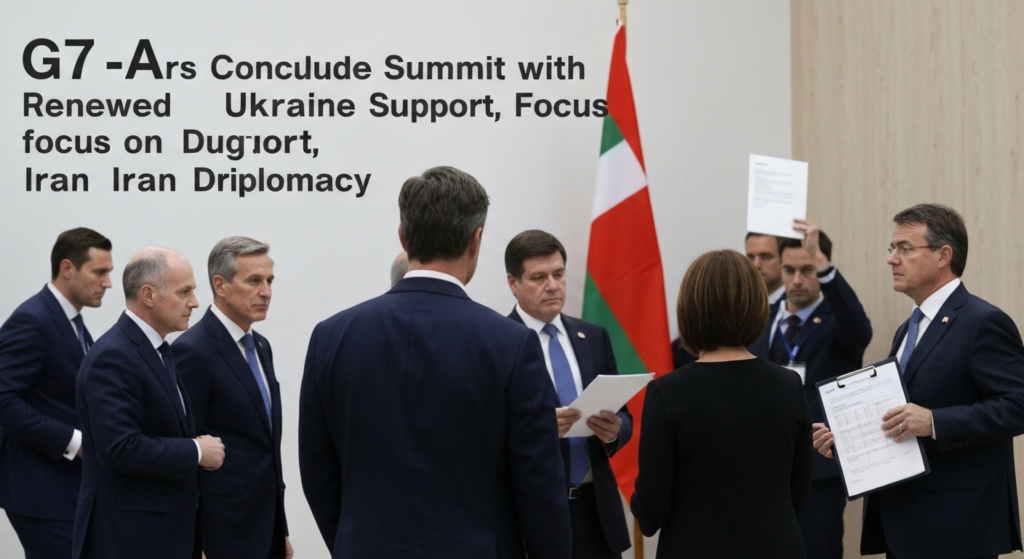
Leaders of the Group of Seven (G7) nations concluded their summit work Thursday, publicly reaffirming robust support for Ukraine while also addressing the diplomatic landscape surrounding an agreement with Iran. The finalized diplomatic package underscores continued sanctions, air defense assistance, and the U.S. administration’s foreign policy commitments.
The summit’s closing statements emphasized a unified front on Ukraine, signaling ongoing military and financial aid to Kyiv. This commitment is intended to bolster Ukraine’s defensive capabilities and sustain its resistance against ongoing aggression. Officials reiterated the importance of international solidarity in the face of geopolitical challenges.
Concurrently, the G7 nations engaged in discussions regarding the United States’ diplomatic efforts with Iran. While specific details of the U.S.-Iran agreement were not fully disclosed in public statements, the G7’s engagement suggests a coordinated approach to regional stability and nuclear non-proliferation concerns. The diplomatic package includes provisions for maintaining existing sanctions and exploring avenues for de-escalation.
The implications of these international agreements extend to various sectors, including defense, energy, and economic policy. For communities with significant military presence, such as those in the Upstate region, sustained foreign policy commitments can influence defense spending and the readiness of military personnel. Decisions made at international forums like the G7 summit can also impact global energy markets, potentially affecting fuel prices and supply chains.
White House briefings following the summit highlighted the administration’s strategy to leverage diplomatic channels alongside economic pressure. The focus remains on ensuring that foreign policy decisions are aligned with national security interests and international norms. The administration stressed the importance of separating confirmed summit statements from subsequent speculation regarding the implementation of these agreements.
Officials indicated that the ongoing dialogue among G7 members is crucial for navigating complex international relations. The summit served as a platform for leaders to align strategies on critical global issues, from regional conflicts to economic stability. The emphasis on both direct support for Ukraine and diplomatic engagement with Iran reflects a multifaceted approach to contemporary geopolitical challenges.
The G7’s collective stance on Ukraine is designed to provide a predictable framework for continued assistance, allowing for sustained defensive operations and reconstruction efforts. This approach aims to deter further aggression and promote a lasting peace settlement.
Regarding Iran, the diplomatic discussions centered on preventing nuclear proliferation and promoting regional security. The G7 leaders acknowledged the complexities of engaging with Iran and underscored the need for verifiable commitments. The continuation of sanctions, as outlined in the diplomatic package, is intended to maintain leverage in future negotiations.
The international community’s response to these developments will be closely watched. The effectiveness of the G7’s coordinated efforts will depend on sustained commitment and adaptability to evolving geopolitical circumstances. The summit concluded with a clear message of resolve on key foreign policy objectives.
Why it matters in Greenville:
The international agreements reached at the G7 summit, particularly concerning Ukraine and Iran, carry tangible consequences for Greenville. As a region with a significant industrial base and a notable presence of military families, fluctuations in global energy prices or shifts in defense spending priorities can directly affect local economies and household budgets. For instance, changes in oil markets, influenced by international diplomacy with Iran, can impact the cost of transportation and manufacturing for companies like Michelin North America. Furthermore, sustained U.S. foreign policy commitments abroad can influence the operational tempo and resource allocation for military installations that support personnel and families residing in the Greenville area. The decisions made on the international stage thus reverberate through the local economic and social fabric of Greenville.