

News Summary
A recent study by Furman University highlights the challenges small farmers in Greenville County, S.C. are facing due to rising land prices and urban development. The Shi Institute for Sustainable Communities has developed a mapping tool to address these issues, visualizing the impact of gentrification on farmland. As the number of farms declines nationwide, pressures from newcomers and rising housing costs threaten local food security. Legislative efforts seek to preserve agricultural land, but more research is needed to support small farmers against these evolving threats.
Greenville, S.C. – Gentrification Pressures on Local Farmers
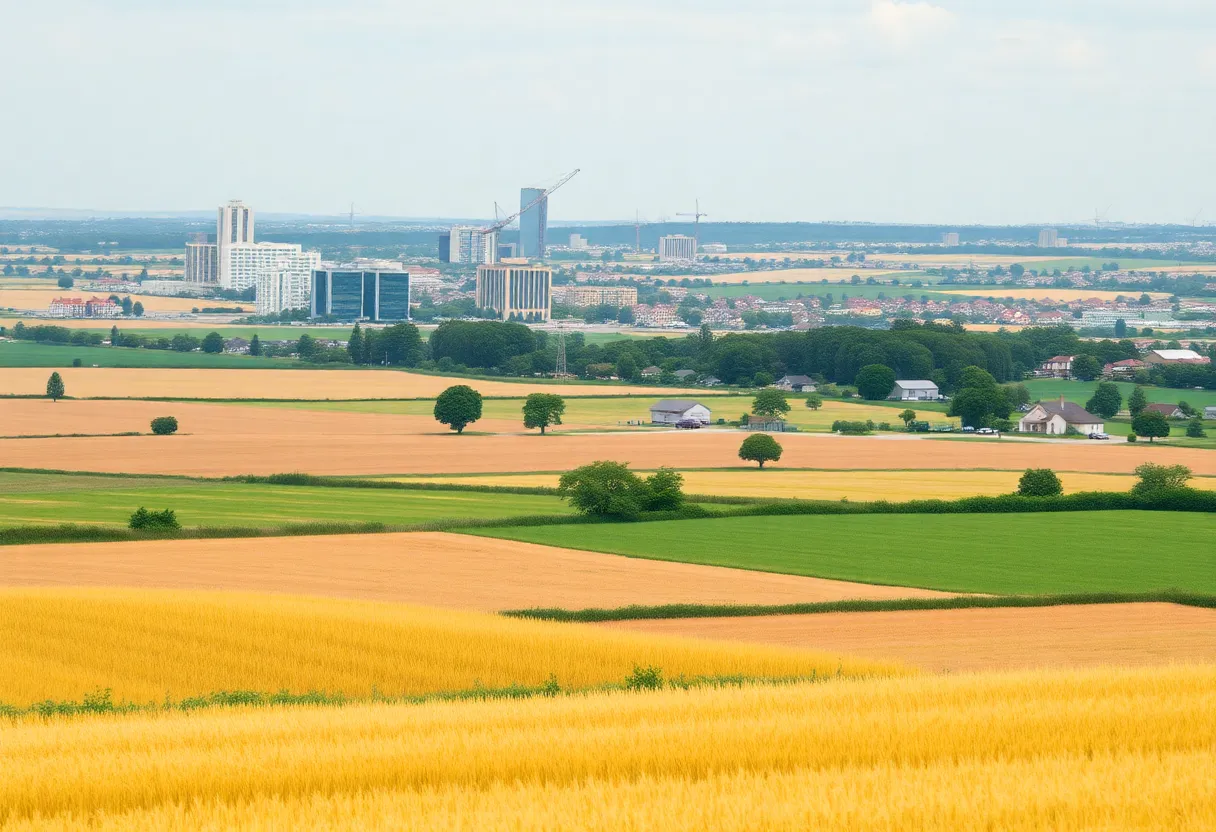
A new study from Furman University highlights the increasing challenges small farmers face in Greenville County, S.C., due to rising land prices and pressures from developers. As urban development encroaches on rural areas, the agricultural landscape is under threat, negatively impacting local farmers and food security.
The Shi Institute for Sustainable Communities at Furman University has created a mapping tool designed to visualize the impact of gentrification on farmland across key areas in South Carolina, including Charleston, Greenville, Columbia, and Myrtle Beach. This tool aims to assist farmers and agricultural extensions in assessing risks to their land and identifying where support is most needed.
Declining Number of Farms
According to recent data, the number of farms across the United States has significantly declined. By 2024, the U.S. Census reported only 1.88 million farms, marking an 8% drop since the previous census in 2017. The trend highlights a broader national concern as farming operations shrink amidst escalating land values driven by urban expansion.
Threatened Agricultural Land
In South Carolina, agricultural land is particularly vulnerable, especially near urban developments where property values rise faster than local income levels. The study identifies impacted regions within the state, such as Johns Island, Fairfield County, and Lake Greenwood. These gentrification pressures often lead to the sale of generational farmland, which poses a direct threat to local food security.
Addressing this issue is critical, as newcomers—many of whom are higher-income remote workers drawn to the natural amenities of rural areas—exacerbate these pressures. They often lack an understanding of the land’s historical significance, which compounds the challenges facing small farmers.
Rising Housing Costs and Economic Disparities
Areas like Longtown and Campobello demonstrate a worrying trend where housing prices are outpacing local income levels. This discrepancy illustrates the mounting pressures rural communities and small-scale farmers are experiencing during a time of significant change.
Legislative Responses and Proposals
In response to ongoing land loss, South Carolina legislators are exploring measures to encourage farmers to adopt conservation easements, which serve to preserve agricultural land from development. Additionally, discussions in Congress are underway regarding potential limits on foreign ownership of American farmland, reflecting widespread concerns over national food security.
Landowners frequently encounter difficulties managing heirs’ property, complicating land transfer and jeopardizing economic viability. Furman’s research proposes several recommendations to address these challenges, including creating incentives for farmers to enhance their investments in land, supporting organizations focused on heirs’ property, and advocating for strong agricultural preservation policies.
The Need for Further Research
Further investigation into the extent of land risks and potential community support strategies is essential. Effective measures will help safeguard small farmers against the evolving pressures they face from urban development, ensuring the sustainability of both the agricultural landscape and local food systems in South Carolina.
Deeper Dive: News & Info About This Topic
HERE Resources
Additional Resources
- Post and Courier: Furman University Study on Gentrification
- Greenville Online: Gentrification and Black Landowners
- Bloomberg: Farm-to-Table Movement and Rural Gentrification
- Civil Eats: Food Justice and Land Justice
- Modern Farmer: Gullah Farmers in South Carolina
- Wikipedia: Gentrification
- Google Search: Rural Gentrification
- Google Scholar: Gentrification and Agriculture
- Encyclopedia Britannica: Gentrification
- Google News: Gentrification South Carolina