

News Summary
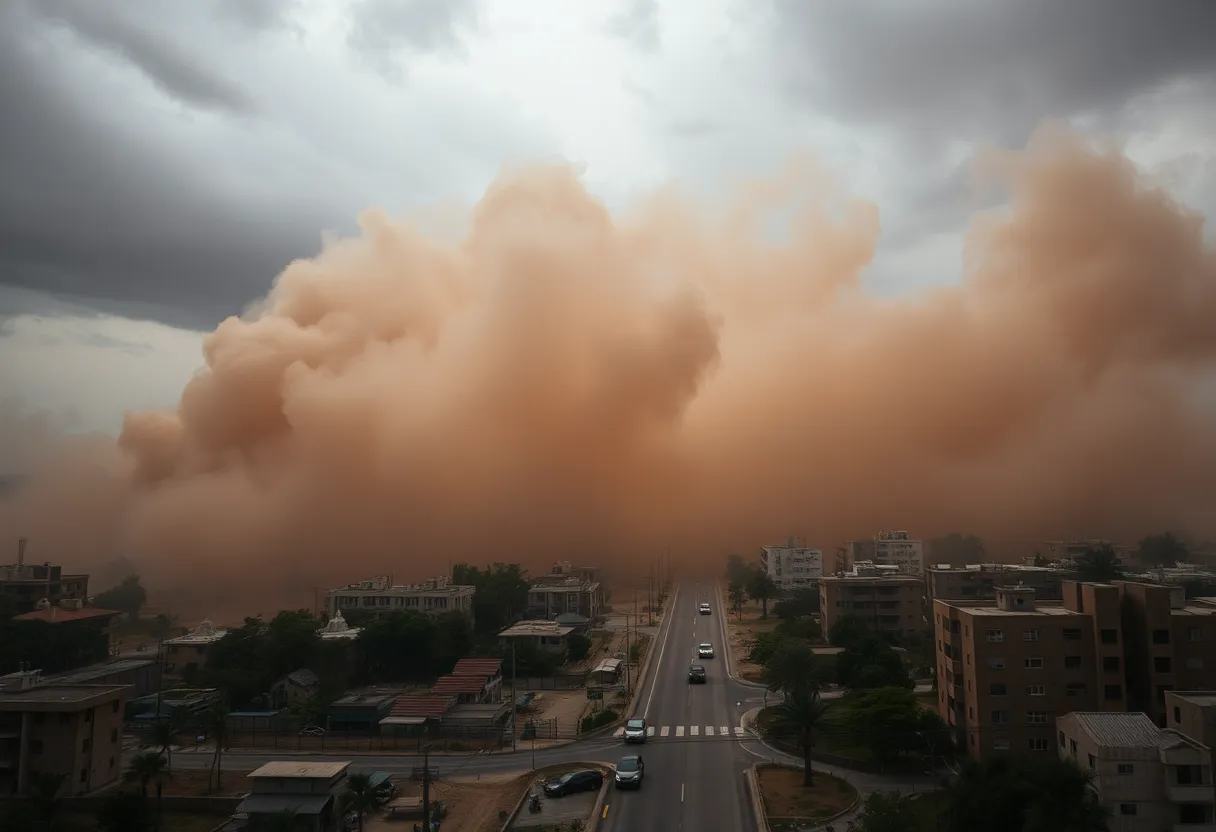
Residents of Phoenix, Arizona, faced a powerful haboob dust storm that significantly reduced visibility and led to over two inches of rainfall shortly thereafter. With wind speeds reaching up to 66 mph, the storm created towering walls of dust that stretched for miles. This extreme weather phenomenon is common in the region, typically occurring a few times a year. As climate change intensifies, these storms might become more frequent. Safety recommendations for drivers during dust storms are crucial, as visibility can drop to dangerous levels in an instant.
Massive Haboob Dust Storm Hits Arizona – Visibility Reduced and Rain Follows!
On Monday, residents of Phoenix and other parts of Arizona experienced a significant weather spectacle when a massive dust storm, known as a haboob, rolled through the region. This extraordinary storm cast a dark pall over the area, making it nearly impossible for drivers to see just a few feet in front of them.
What is a Haboob?
A haboob is a powerful dust storm triggered by thunderstorms that send gusts of wind whipping across arid and semi-arid landscapes. These storms create walls of dust that can tower thousands of feet in the air, stretching several miles wide. On this fateful day, wind speeds reached up to 66 mph, contributing to the massive dust cloud that rolled through.
Thunderstorms generate strong downdrafts with wind velocities between 50-80 mph. When they strike the ground, they kick up dust and debris, transforming the landscape into a hazy, obscured scene.
Speed and Distance
These haboobs can travel astonishing distances, covering up to 100 miles in a short period, depending on the atmospheric conditions. Given that Arizona typically sees one to three of these large dust storms each year, residents are familiar with how quickly and ferociously they can emerge.
Impact on Arizona’s Climate
Interestingly, climate change is believed to contribute to the intensity and frequency of events like this. While drought conditions are a breeding ground for haboobs, the localized bursts of rain have also grown more intense. Just after the haboob, Arizona measured over 2 inches of rainfall, further contributing to the chaotic weather conditions.
Driving Hazards
Dust storms can severely reduce visibility, making driving especially dangerous. In such cases, the National Weather Service (NWS) frequently issues dust warnings, advising motorists to stay alert, as visibility can drop to a quarter mile or less very quickly. When a dust storm hits, it’s best for drivers to pull over, turn off their lights, and wait for the conditions to improve. Setting the emergency brake is also advisable to prevent unintended vehicle movement.
Safety Tips
Motorists should be aware that haboobs can spring up unexpectedly, often catching drivers off guard. Essential safety recommendations from the NWS include:
- Pulling safely off the road
- Turning off vehicle lights
- Setting the emergency brake
- Keeping tail lights off to avoid collisions with other vehicles
Understanding the Term ‘Haboob’
The term “haboob” is derived from the Arabic word for “strong wind”. It’s fascinating how language captures the force of nature, and these storms are truly a phenomenon that showcases the incredible power of wind and weather.
In summary, while haboobs are commonplace in the Southwestern U.S., their sudden onset can turn tranquil days into chaotic scenes filled with dust and rain, emphasizing the importance of weather preparedness. Keep an eye on the skies, and if you’re in an area prone to these dust storms, remember to stay safe!
FAQs
What is a haboob?
A haboob is a type of dust storm that forms when dry winds from thunderstorms strike the ground, stirring up dust and debris into massive walls that can travel several miles.
How fast can winds be during a haboob?
Winds during a haboob can reach speeds of up to 66 mph, with downdrafts from thunderstorms hitting the ground at speeds between 50-80 mph.
What should I do if I encounter a dust storm while driving?
If you encounter a dust storm while driving, pull over safely to the side of the road, turn off your headlights, set your emergency brake, and wait for conditions to improve.
Key Features of Haboobs
| Feature | Description |
|---|---|
| Wind Speed | Up to 66 mph |
| Distance | Can travel up to 100 miles |
| Dust Coverage | Walls of dust thousands of feet tall |
| Visibility Conditions | Can reduce visibility to less than a quarter mile |
| Annual Occurrence in Arizona | 1 to 3 large dust storms per year |
Deeper Dive: News & Info About This Topic
- AZ Family: Massive Dust Storms Called Haboobs Hit Arizona
- Wikipedia: Haboob
- Washington Post: Haboob Dust Storm in Phoenix
- Google Search: Haboob
- BBC: Videos on Haboobs
- Encyclopedia Britannica: Haboob
- CNN: Haboob Dust Wall Storm
- Google Scholar: Haboob
- The Guardian: Arizona Dust Storm Impact
- Google News: Haboob