

News Summary
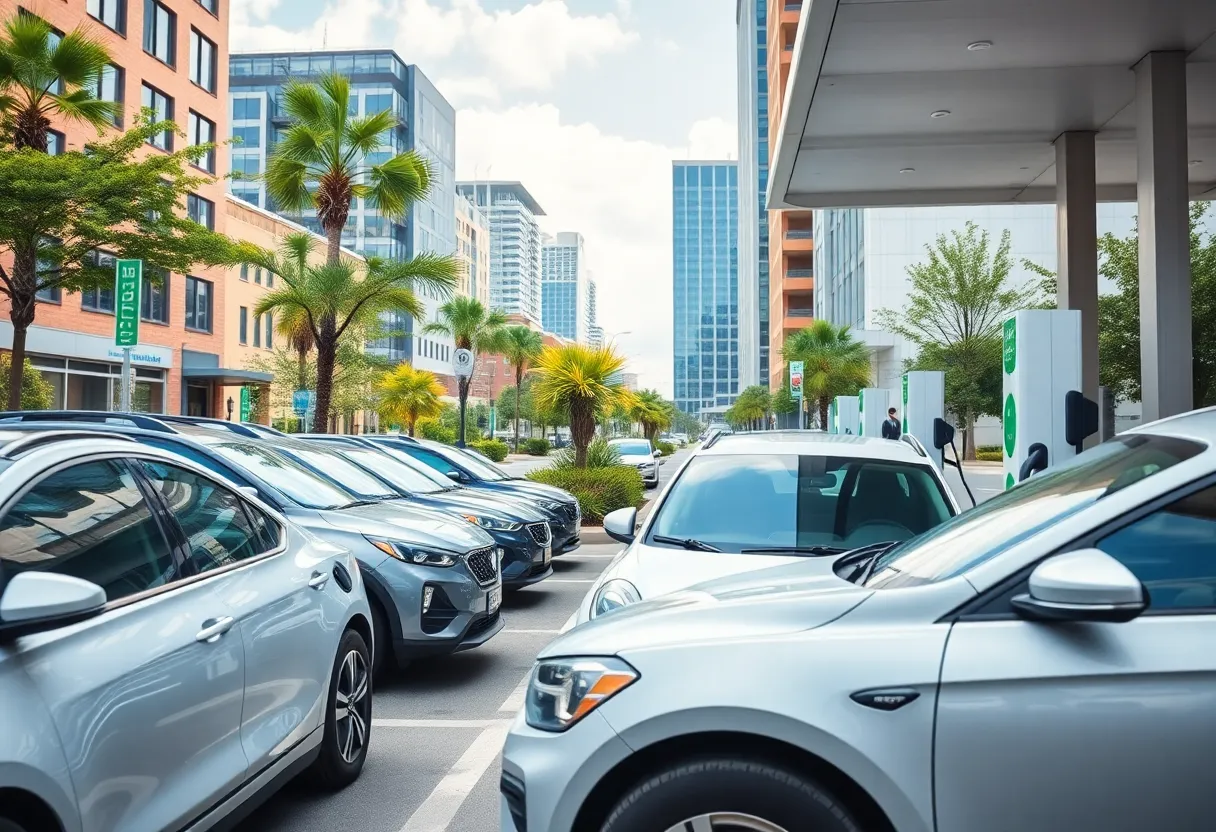
South Carolina has reported a significant increase in electric vehicle sales, with over 2,500 units sold in the first quarter. Contributing factors include new legislation aimed at improving charging infrastructure and supporting small businesses in the EV sector. The state’s ratio of EVs to public charging stations ranks it 20th nationally. Despite the political divide regarding electric vehicles, both legislative initiatives and corporate investments, such as those from Scout Motors and BMW, indicate a promising future for the state’s EV market.
South Carolina is experiencing a significant rise in electric vehicle (EV) sales, with over 2,500 EVs sold in the first quarter of 2025. This uptick places the state at No. 34 in terms of EV market share, according to a recent study by the Alliance for Automotive Innovation. Factors contributing to this growth include new legislation designed to enhance the charging infrastructure while promoting a fair competitive environment for small businesses in the EV sector.
This year, the passage of Senate Bill 275 prohibits electric utilities from using ratepayer funds to build, own, or operate EV charging stations. The intention behind this legislation is to create a more equitable landscape for small businesses involved in the electric vehicle industry. The new bill is anticipated to foster a stable investment environment, encouraging growth in both sales and infrastructure for electric vehicles in South Carolina.
Despite ongoing concerns regarding the broader political climate, a portion of the national narrative around electric vehicle adoption and infrastructure emphasizes the importance of a free-market approach. This approach is gaining traction with more states, including South Carolina, positioning themselves to embrace EV charging accessibility as a robust business opportunity rather than strictly a political issue.
In addition to rising sales, South Carolina ranks No. 20 in the ratio of electric vehicles to public charging stations, with approximately 22 EVs for every public charging port. This indicates a burgeoning support system for EV users, even as public perception significantly influences purchasing decisions. Political narratives regarding electric vehicles oscillate between optimism and skepticism, shaping consumer attitudes and behaviors.
A striking trend in South Carolina’s EV market is the notable disparity among political affiliations regarding electric vehicle interest. Around 70% of Republicans in the state reportedly reject electric vehicle adoption compared to just 30% of Democrats. This gap highlights the sometimes polarized views on EVs, impacting broader acceptance and market growth in the state.
Recent legislative attempts have been made to allow manufacturers to sell EVs directly without having to go through franchise agreements. Although a recent initiative, known as the South Carolina Consumer Freedom Act, has currently stalled in the legislature, discussions around potential modifications suggest that this topic may be revisited in the future.
As the electric vehicle landscape develops, significant investments are underway within the state. Scout Motors plans to establish an EV manufacturing plant in Richland County, which is expected to create 4,000 jobs. However, this move has raised concerns among existing franchise dealerships regarding the potential impact on their businesses.
Moreover, major automotive player BMW Manufacturing is heavily investing in electric vehicles, with plans to produce at least six fully electric BMW X models by 2030. The company is also establishing a new battery assembly plant in Woodruff, which will provide around 300 jobs and further bolster South Carolina’s position in the EV market.
Looking beyond state borders, national experts predict sustained growth in electric vehicle demand, despite potential setbacks. This projected increase is expected to be driven by improvements in infrastructure and declining costs of EV materials, suggesting that the future of electric vehicles rests on an increasingly stable foundation.
In conclusion, South Carolina’s increasing electric vehicle sales and evolving charging infrastructure reflect a broader trend towards acceptance and investment in the EV market. Legislative efforts and corporate initiatives continue to play a crucial role in shaping the future landscape of electric vehicles in the state.
Deeper Dive: News & Info About This Topic
- Charleston Business: South Carolina EV Sales & Charging Growth
- Post and Courier: BMW Electric Vehicles in SC
- CBT News: SC Direct EV Sales Bill Stalls
- Wikipedia: Electric Vehicle
- WLTX: Direct Sales of Electric Vehicles in SC
- Encyclopedia Britannica: Electric Vehicle
- The State: SC Politics and EVs
- Google News: South Carolina Electric Vehicles