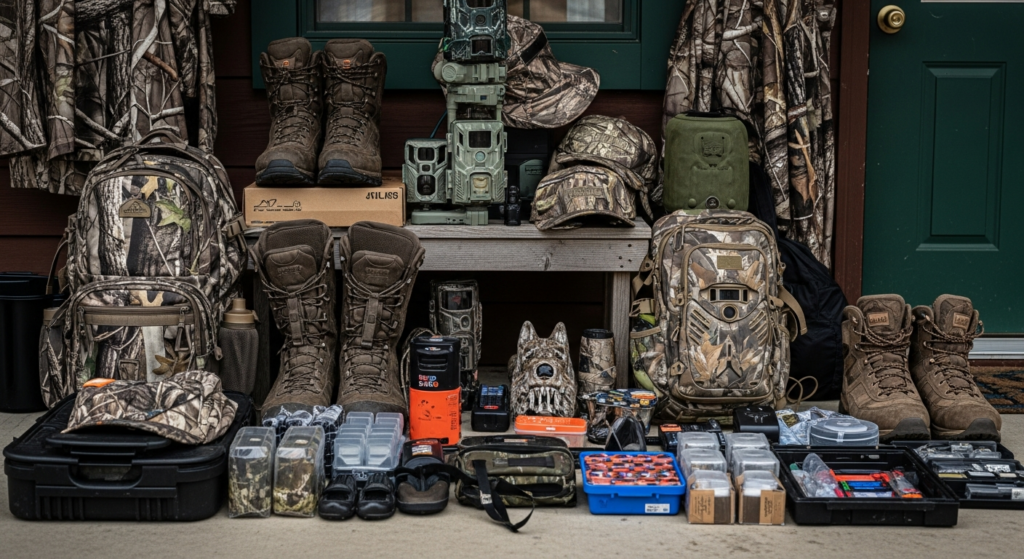
With the deer hunting season on the horizon, hunters across Greenville and the wider Upstate region are undertaking comprehensive preparations, ensuring their equipment is in peak condition, their stands are safely installed, and their scouting strategies are well-honed. A detailed preseason checklist emphasizes the importance of thorough inspections, maintenance, and strategic planning to enhance both safety and success in the field.
For those utilizing archery equipment, the checklist underscores the necessity of a rigorous inspection regimen. Bows should be carefully examined for any signs of wear or separation in limbs, cams, and strings. Regular waxing of strings is recommended to prolong their life and maintain performance. Any questionable parts, from worn cables to damaged fletching, should be replaced proactively to prevent failures during critical moments. Beyond equipment integrity, consistent practice is paramount. Regular shooting sessions are advised to build and maintain muscle memory, refine aim, and ensure consistency, which is crucial for ethical and effective hunting.
Firearm users are similarly advised to perform thorough maintenance. Rifles require meticulous cleaning and oiling to ensure smooth operation and prevent corrosion. A critical step involves verifying that scopes are securely mounted and properly zeroed. This often entails a trip to a shooting range to confirm the rifle’s accuracy at various distances, accounting for potential shifts from storage or transport. For crossbow and traditional bow hunters, the guide specifically recommends using an arrow spinner to check broadhead straightness and alignment. Even a slight wobble can significantly impact arrow flight and accuracy, making this a vital pre-hunt check.
Clothing and personal gear also demand attention. All hunting apparel should be washed with scent-free detergent to minimize human odor, which can alert deer to a hunter’s presence. Each garment should be inspected for holes, worn seams, or fading that could compromise camouflage or warmth. New footwear, if acquired, should be broken in well before the season begins to prevent discomfort and blisters in the field. Hunters are also advised to verify the waterproofing of their outerwear and boots, especially given the unpredictable summer and early fall weather patterns. Treating clothing with permethrin is a recommended step for protection against tick-borne illnesses, a prevalent concern in wooded areas around Greenville.
Safety and navigation are paramount considerations. Treestands, ladder stands, and climbing sticks must undergo a comprehensive inspection for rust, loose fasteners, cracks, or frayed straps. Any component showing signs of compromise should be repaired or replaced immediately. A full-body harness, a non-negotiable safety item for elevated hunting, should be tested with a lifeline to ensure proper function and fit. For navigation, GPS units and external battery packs need to be fully charged and tested. Additionally, downloading mapping applications and necessary offline maps for the hunting area is crucial, particularly in remote locations where cellular service may be unreliable.
Strategic stand placement is a cornerstone of successful deer hunting. The checklist advises positioning stands near natural pinch points, funnels, creek crossings, or staging areas that are close to known food sources or bedding grounds. Hanging stands early in the preseason, ideally weeks or even months before opening day, allows deer to acclimate to their presence, reducing the likelihood of them avoiding the area. When trimming shooting lanes, the guide suggests a conservative approach, removing only what is necessary to ensure clear shots without over-clearing the area and alerting deer. All stand setup activities should be conducted using quiet, scent-free methods to minimize disturbance.
Modern map scouting techniques offer significant advantages. Hunters are encouraged to study contour lines on topographical maps to identify saddles, ridges, and draws, which often serve as natural travel corridors for deer. Identifying creeks, ponds, and low spots helps understand water sources and potential bedding areas. Marking agricultural fields, oak stands, and natural browse areas on maps helps pinpoint food sources. Evaluating access routes under different wind conditions is also crucial to avoid having human scent carried into a hunting area. The REVEAL app offers an Xtra add-on, starting at $4 per month, which provides valuable features such as property boundaries, detailed property information, access points, shape and path drawing tools, and custom pins, enhancing the precision of digital scouting efforts.
Trail cameras have become an indispensable tool for many hunters. Proper preparation for these devices includes deploying cameras well in advance of opening day to gather sufficient data on deer movement patterns without disturbing the animals close to the season. Batteries should be fully charged, and SD cards, if used, should be formatted and clearly labeled. Before final deployment, hunters should test the camera’s field of view, motion activation, flash, and other settings to ensure optimal performance. Cellular cameras require activation and software updates before being placed in the field. The guide also notes that Ultra and REVEAL 3.0 series cameras feature internal memory, making external SD cards optional for these models, and advises using the latest version of the REVEAL app for seamless operation and data management.
Why it matters in Greenville
For many in Greenville, the approach of deer hunting season is a significant annual event, deeply intertwined with the region’s outdoor heritage and natural landscape. The meticulous preparation outlined in this checklist directly impacts the safety of hunters utilizing the extensive natural areas accessible from Greenville, including those near the Saluda River and Lake Hartwell. Local businesses, from sporting goods stores to outdoor outfitters, experience increased activity as hunters purchase and maintain their gear, contributing to the local economy. Furthermore, responsible hunting practices, reinforced by comprehensive checklists, are vital for wildlife management and ensuring the health of deer populations, which is a shared interest for both hunters and the broader Greenville community that values the region’s natural resources and recreational opportunities. Adherence to these guidelines helps preserve the integrity of the sport and the ecological balance of the Upstate’s diverse ecosystems.