

News Summary
Florida’s new immigration detention center, dubbed ‘Alligator Alcatraz,’ has opened in the Everglades but is encountering significant funding and legal hurdles. The facility, designed to hold 5,000 detainees, faces opposition from environmental groups and Native American tribes concerned about its impact on local habitats and sacred lands. Governor Ron DeSantis advocates for the center amid growing protests and speculation about its funding sources, creating uncertainty about its future as both state and federal agencies navigate the crisis.
Florida’s “Alligator Alcatraz” Faces Funding and Legal Challenges
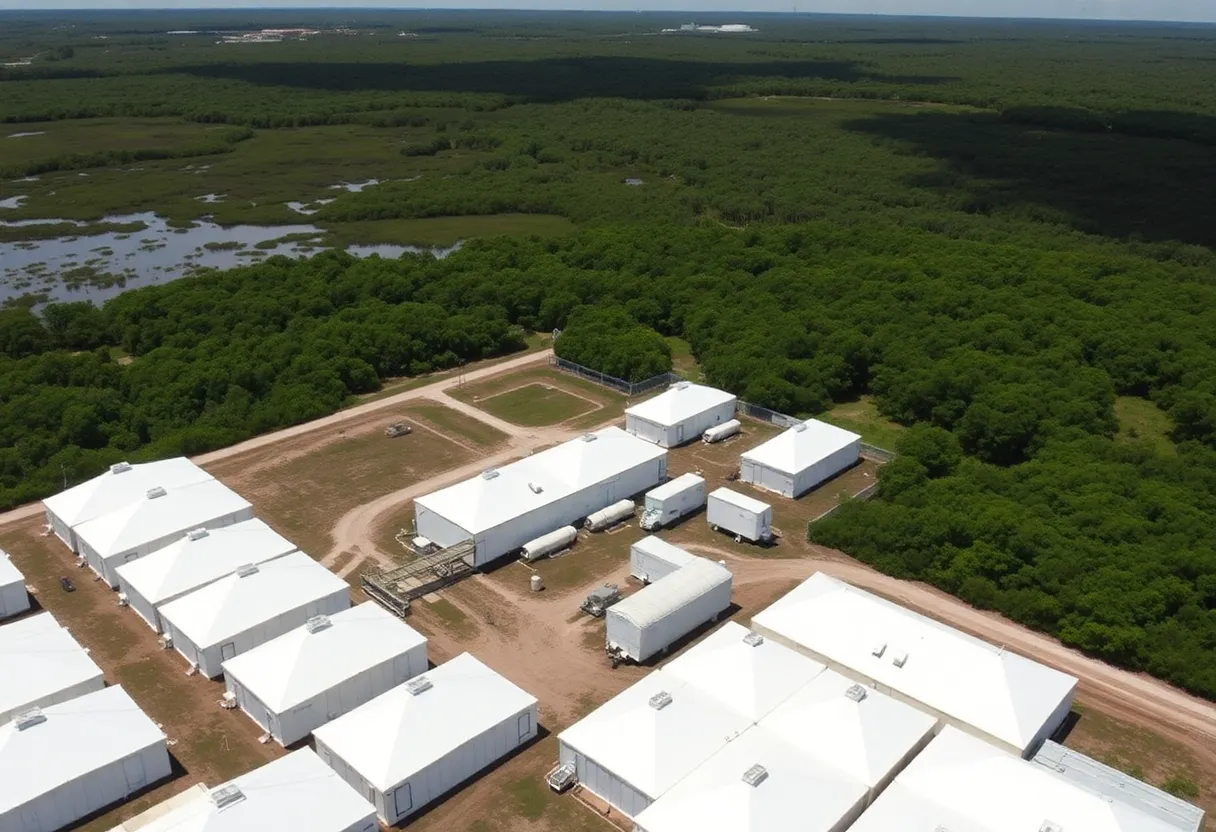
The state of Florida has recently opened a controversial immigration detention center in the heart of the Everglades, aptly nicknamed **“Alligator Alcatraz”**. Built in a remarkably short time of just eight days, this facility, made up of heavy-duty tents and trailers, is designed to house a significant number of detainees—initially 3,000, with plans to expand that capacity to 5,000. However, the center is already running into quite a few bumps in the road regarding its funding and legal status.
The Price Tag
Operating this facility is no small feat, with projected annual costs soaring to a staggering **$450 million**. Both state officials and federal representatives have indicated that this hefty financial burden would be covered by federal funds. However, recent court documents from the Department of Homeland Security (DHS) reveal a rather surprising twist in the narrative: Florida has received **“no federal funds”** for the center and, astonishingly, hasn’t even applied for any.
Legal Woes Ahead
This revelation comes as part of an ongoing legal battle initiated by environmental groups aiming to put the brakes on the facility’s operation. They argue that the construction and operation of **“Alligator Alcatraz”** poses a significant threat to the delicate wetlands and endangered species habitats, including the iconic Florida panther. According to these environmentalists, without a rigorous environmental review, the center shouldn’t be allowed to run.
State’s Position
Despite the legal challenges and lack of funding, Governor Ron DeSantis has been vocal about the necessity of this center. He claims it’s crucial for processing and deporting undocumented immigrants, relieving some of the pressure on local law enforcement agencies. Nevertheless, the opening of the facility has brought together various communities in opposition, including environmentalists, Native Americans, and immigrant advocates.
Opposition from Native American Tribes
The **Seminole Tribe of Florida** and other Native American groups are particularly concerned. They argue that the detention center not only threatens sacred lands but also compromises environmental integrity. Their opposition signifies a growing trend among different demographics who fear the implications of this new facility extend beyond just immigration policy.
Public Protests
In light of these concerns, public protests have quickly gained momentum, organized by various groups rallying against both the detention practices and potential environmental damage. The protests reflect wider public sentiment and signal that many people are unwilling to let these concerns slide under the radar.
Seeking Answers
In the midst of the chaos, Florida’s attorney general’s office and the Department of Emergency Management have faced inquiries about the federal funding applications. Unfortunately, these departments have remained tight-lipped, adding to the growing uncertainties surrounding the facility’s operation.
Future of the Facility
As the state moves forward to prepare the facility for detainee housing, initial steps include a security sweep to ensure that no weapons are present. Many detainees are anticipated to be transferred from local jails, which could further complicate logistics for the operational rollout.
Funding Outlook and Tensions
Interestingly, a spokesperson from the DHS has indicated that **FEMA funds** will eventually be used for the center’s operation. However, these funds require a formal application from state officials, which has yet to be submitted. The relationship between state officials and DHS has been marked by logistical tensions, particularly regarding the center’s public perception and management strategies.
Conclusion
With environmental and legal challenges looming, the future of the **“Alligator Alcatraz”** facility remains uncertain. Concerns regarding the humane conditions for detainees and the broader implications for immigration policy during this administration continue to overshadow the facility’s goals. As this story unfolds, both state and federal agencies will need to address a multitude of pressing questions that could dictate the center’s fate.
Deeper Dive: News & Info About This Topic
- Miami Herald: Florida’s “Alligator Alcatraz” Faces Funding and Legal Challenges
- NBC News: Migrant Detention Center in the Everglades Faces Lawsuit
- Tallahassee: Seminole Tribe Calls “Alligator Alcatraz” a Threat to Sacred Lands
- The Albertan: What to Know About “Alligator Alcatraz” Immigration Detention Site
- Google Search: Florida Immigration Detention Alligator Alcatraz