

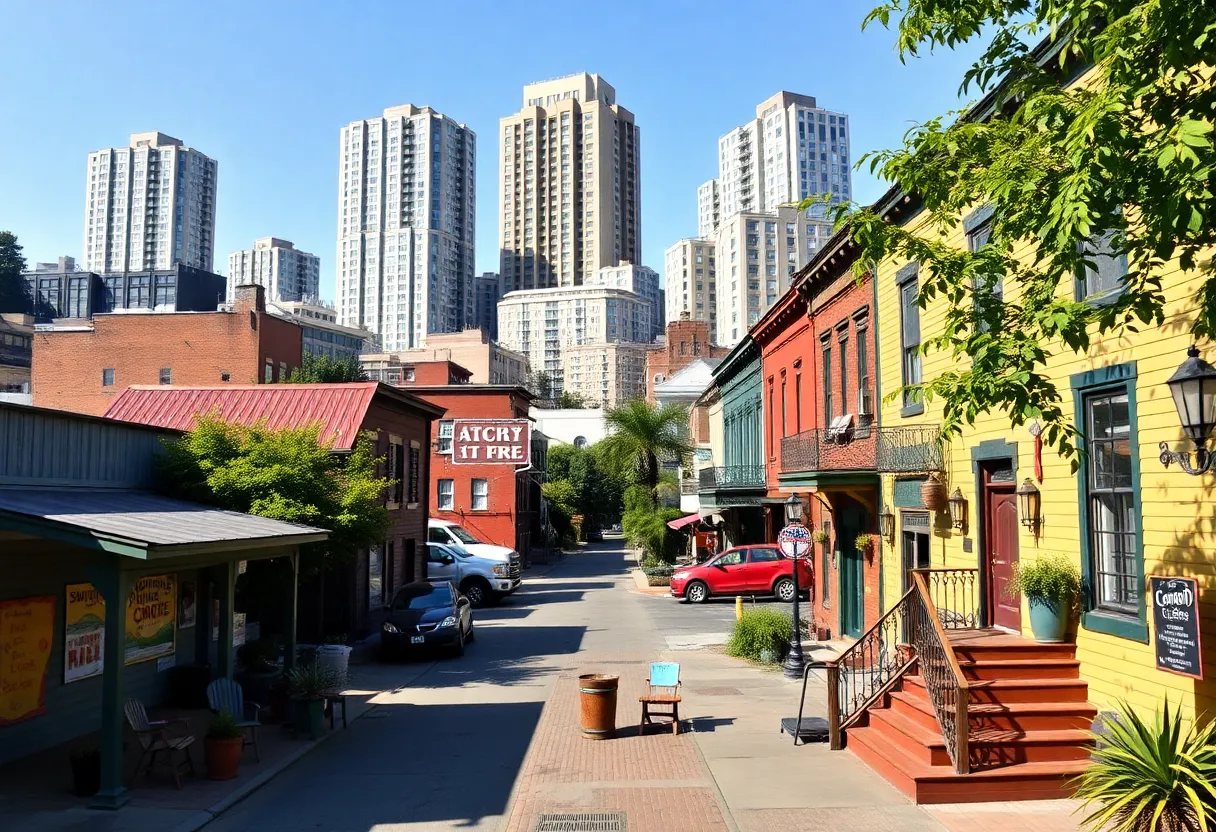
News Summary
A study by Furman University reveals alarming gentrification trends in Greenville’s Sterling community, risking long-term residents’ displacement. Rising property values, often controlled by LLCs, endanger renters, particularly Black households. Local leaders stress the need for community resilience amid these ongoing changes, prompting a public meeting for residents to discuss their concerns. Despite these challenges, the community maintains essential resources to preserve its cultural identity.
Greenville – A recent study by Furman University highlights the rapid gentrification threatening the historic Sterling community in Greenville. This development poses significant displacement pressures on long-time residents and could reshape the community’s cultural landscape.
The study, commissioned by the Urban League of the Upstate and Habitat for Humanity, emphasizes that Sterling’s property values have been rising at an alarming rate. Over the past 5 to 10 years, the escalation in property values has outpaced nearly every other area in Greenville County. In some parts of Sterling, property values have surged by as much as 135% compared to the county average. This trend indicates a significant risk for existing residents, especially those who are renters.
According to the findings, almost half of the parcels currently occupied by renters and 39% of vacant residential properties in the Sterling community are now owned by limited liability companies (LLCs) or corporate entities. As a response to the increasing property values, many residents are facing mounting pressure to either relocate or adapt to an evolving neighbor with changing demographics.
Concerns about homeownership are particularly pressing, as the study reveals that 79% of Black households in Sterling are renting their homes. This high rate of renting puts these households at an even greater risk of displacement due to rising housing costs. Community leaders suggest that the decline in homeownership, particularly among African American families, is a deeply personal issue that resonates with the community’s heritage.
Despite the challenges posed by gentrification, the study acknowledges that the Sterling community retains key assets that can support its identity. Facilities such as community centers and places of worship, along with initiatives from organizations like Habitat for Humanity aimed at promoting affordable housing, are vital resources for the community. These entities play an essential role in preserving the social fabric of Sterling amid ongoing development pressures.
Residents are increasingly being pushed further from the city center, which affects their access to critical resources and services. The Urban League’s Program Director has expressed values to the emotional ramifications of these changes, emphasizing that they are not just about property or finances, but about the people and families who call Sterling home.
An interactive “gentrification heat map” included in the study visually represents the changing landscape of the neighborhood. This tool aims to inform residents and stakeholders about the dynamics at play in their community, enabling them to better understand the challenges they face and work toward preserving their historical identity.
The study’s authors stress the importance of fostering community resilience through programs that support economic mobility and sustainability. There is an urgent need for residents to be aware of available housing assistance programs that can help them navigate the changes in their neighborhoods.
To facilitate an open dialogue about the study’s findings, a public meeting is scheduled for May 29 at the Sterling Community Center. This event offers residents the opportunity to engage with the research directly and discuss their experiences and concerns regarding the gentrification affecting their community.
Over the past four decades, there has been a notable decline in the number of Black residents in historically Black neighborhoods across Greenville. This demographic shift aligns with wealthier white residents moving into these areas as development pressures continue to increase. However, community leaders remain optimistic that by leveraging existing assets, Sterling can preserve its cultural and social identity amidst the evolving landscape of gentrification.
Deeper Dive: News & Info About This Topic
HERE Resources
Gentrification Threatens Greenville’s Historic Sterling Community
Additional Resources
- WYFF4: Gentrification Displacement Study
- Greenville Online: Gentrification in Greenville
- Post and Courier: Furman Study on Sterling
- Post and Courier: Racial Displacement in Greenville
- Wikipedia: Gentrification