

News Summary
Greenville County Schools consider introducing impact fees on new construction to fund school expansion amid growth challenges.
Greenville County Schools Considering Impact Fees for New Construction
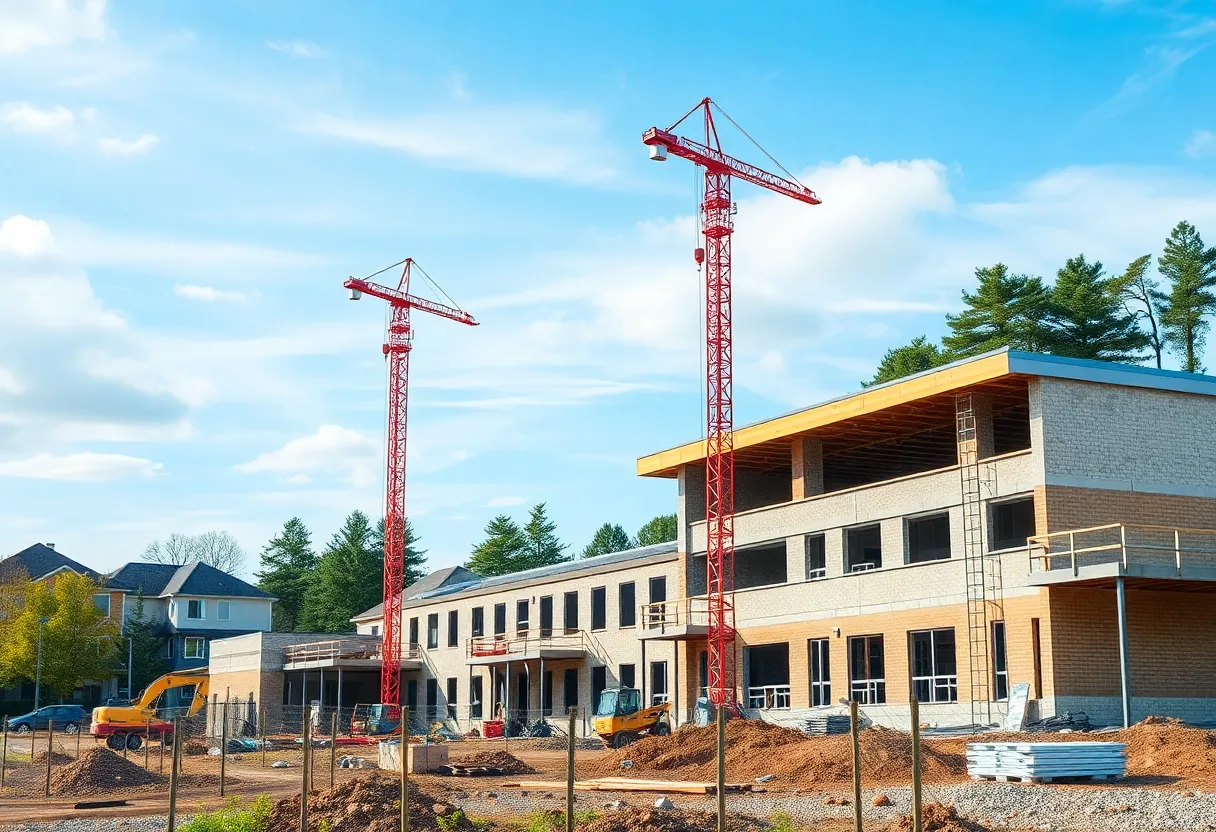
Greenville County Schools are exploring the implementation of one-time impact fees on new construction projects to address the growing challenges posed by rapid district growth. The school district’s Committee of the Whole has voted to move forward with a comprehensive study to evaluate the potential impact fees, an initiative that will cost just under $60,000 and is expected to take around four months to complete, pending approval from the full school board at this month’s meeting.
Impact fees are distinct from taxes, meaning they will not be included on property tax bills but will specifically target buyers of new construction. The funds generated from these fees could be allocated for the construction of new schools and the expansion of existing facilities, though they cannot be used for maintenance or operational expenses. The district’s trustee expressed that they are not seeking a dollar-for-dollar reimbursement through these fees and remain uncertain about the final decision on the matter.
Concerns have been raised regarding the potential effects of these fees, particularly in relation to housing prices and affordability. Some trustees worry that implementing impact fees could lead to increased housing costs, possibly slowing down development in an already strained market. In contrast, it is believed by some officials that the impact fees will not significantly burden housing prices, highlighting that many communities have provisions aimed at promoting affordable housing options.
This is not the first time the school district has considered impact fees; discussions were initiated two years ago but did not progress. Meanwhile, the Greenville County Council is also examining the possibility of imposing impact fees, having directed the planning commission to study and recommend a development impact fee ordinance. This study is a necessary step for adopting impact fees as mandated by state law, which will identify how collected funds can be utilized to improve local infrastructure.
Critics of the proposed fees argue that they may increase costs for developers, which could subsequently be passed on to homebuyers. This concern comes amid existing challenges related to housing affordability in the region. Given the anticipated population growth in Greenville County, where projections indicate an increase from approximately 570,000 residents in 2024 to around 740,000 within the next 15 years, the need to address infrastructure requirements is pressing. The county requires an estimated $2 billion to improve infrastructure, particularly roads, that are currently being stretched by rapid development.
The recent rejection of a capital project sales tax by the County Council, which could have generated over $1 billion for road improvements, has escalated the urgency to find alternative funding mechanisms. The council chairman advocates for impact fees as a sustainable approach to managing growth and enhancing infrastructure without imposing additional burdens on current taxpayers.
Current studies will provide insights into how much the proposed impact fees might be for new constructions across the county. State laws govern the use of impact fees, ensuring that funds generated from specific developments are dedicated to tangible improvements in their respective areas.
As Greenville County considers this significant step, the outcomes of the studies and the opinions from both proponents and critics will play a crucial role in determining the future of impact fees and their potential implementation within the district. The discussion signifies broader conversations about growth management, infrastructure funding, and affordable housing in a rapidly changing urban environment.
Deeper Dive: News & Info About This Topic
HERE Resources
Greenville City Council Approves $291.2 Million Budget
Greenville Initiates Major Roadway Improvements and Redevelopment
Additional Resources
- WYFF: Greenville County Schools Impact Fee
- Wikipedia: Impact Fee
- Post and Courier: Greenville County Development Impact Fees
- Google Search: Greenville County growth management
- Greenville Journal: Development Impact Fees Evaluation
- Google Scholar: Impact Fees in Education
- WSPA: Greenville County Considers Developer Impact Fees
- Encyclopedia Britannica: Urban Planning
- Fox Carolina: Greenville Co. Schools Budget Impact
- Google News: Greenville County Impact Fees

Author: STAFF HERE GREENVILLE
The HERE Greenville Staff Writers are a collaborative team of journalists, editors, and local contributors passionate about delivering accurate, timely information to the Greenville community. As part of the HEREcity.com Network, which powers over 100 U.S. city sites including HEREcolumbia.com, our staff draws on collective experience in South Carolina journalism to cover everything from business sales and real estate developments to dining deals and community initiatives. Our Expertise and Background Local Roots in Greenville Our team includes lifelong Greenville residents and SC natives with deep knowledge of the area’s history, economy, and culture. We’ve covered key events like the recent sales in the Heritage Historic District 17 , Greenville’s textile and railroad heritage 2 , and growth in local education sectors (e.g., Greenville Technical College programs) 27 . Collective Experience With over 50 combined years in journalism, our staff has backgrounds in print, digital media, and community reporting. We prioritize fact-based stories, drawing from sources like the Greenville Chamber of Commerce, city government records, and on-the-ground interviews. Commitment to Quality Every article is a group effort, involving research, editing, and verification to ensure reliability. We adhere to journalistic standards, citing credible sources and updating content as new details emerge.