

News Summary
A major textile manufacturer in South Carolina has acquired a specialty fabrics company, enhancing its product range and addressing market demands. The acquisition reflects the manufacturer’s growth strategy in the evolving textile industry. Meanwhile, AESC has paused construction on a significant electric vehicle battery factory due to market uncertainties. The developments highlight changes in the region’s economy, including a surge in philanthropy and educational advancements.
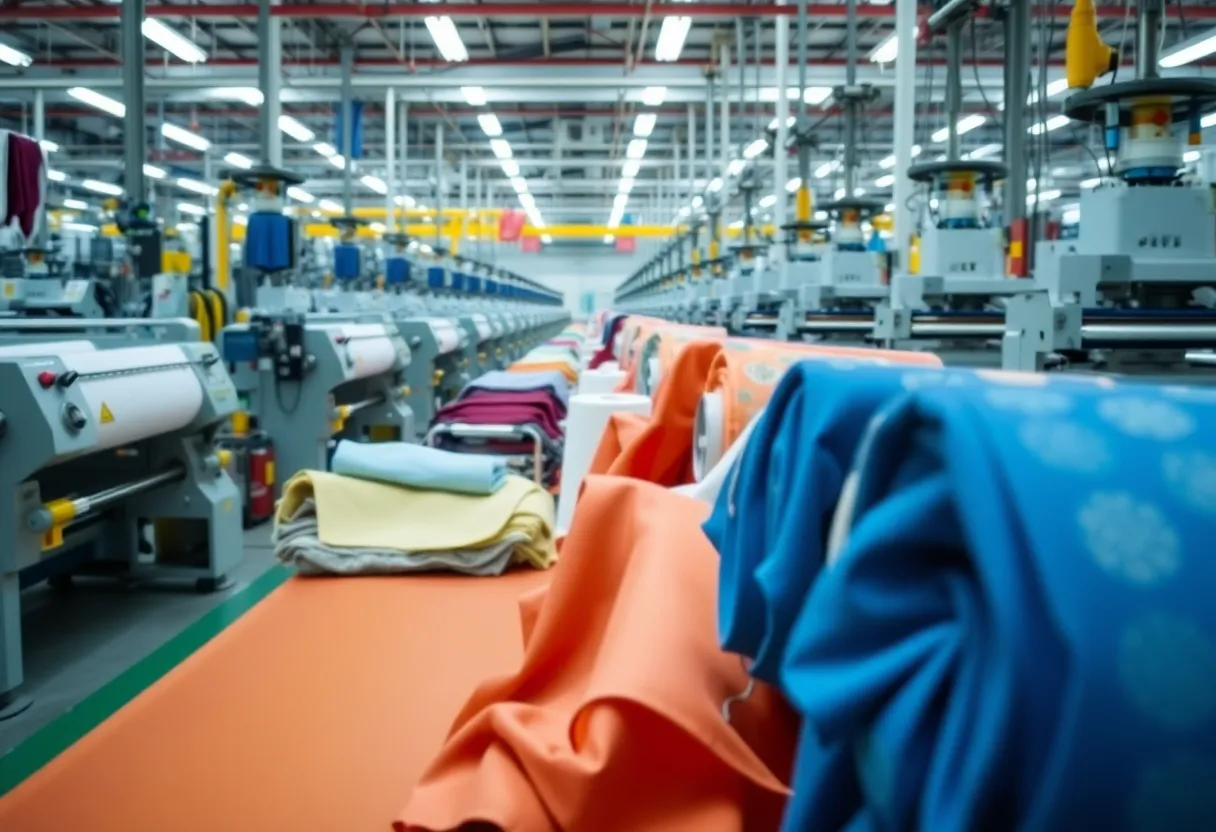
South Carolina – One of the largest textile manufacturers in the United States has announced its acquisition of a specialty fabrics company, which includes a manufacturing plant situated near Florence, South Carolina. This strategic move aims to expand the manufacturer’s range of products, positioning it to better meet evolving market demands.
The acquisition is expected to enhance the manufacturer’s portfolio with innovative fabric solutions, bolstering its capabilities in the competitive textile industry. Details regarding the financial aspects of the acquisition remain undisclosed, but the deal underscores the manufacturer’s commitment to growth and adaptation in a rapidly changing market landscape.
In related developments in the region, AESC, a high-profile electric vehicle battery cell maker, has recently paused construction on its own major project—a $1.6 billion factory in Florence County. This decision has been attributed to “policy and market uncertainty,” as cited by AESC’s representatives. The company has expressed intentions to resume construction once market conditions are more favorable.
AESC, which initially proposed the project in 2022 with an estimated investment of $810 million, has significantly increased its budget due to changes in the project’s scope and scale. The construction of the facility began in 2023, with plans to eventually create 1,600 jobs in the area. However, plans for a secondary facility aimed at servicing BMW’s operations in Mexico have been canceled, as AESC determined that a single facility would suffice to meet market demand.
The ongoing trend of cancellations and delays in clean energy projects has raised concerns among industry observers. Since January, over $14 billion in investments have been canceled or scaled back, eliminating roughly 10,000 potential jobs within this sector. High-profile examples include the cancellation of Kore Power’s $1.2 billion factory in Arizona and Stellantis’s withdrawal from a $3.2 billion electric vehicle battery facility in Illinois.
Meanwhile, in a celebration of longevity and impact in South Carolina, Michelin North America recently marked its 50-year presence in the state, highlighting a substantial economic contribution totaling over $266 billion. The company’s operations have provided approximately 14,000 jobs annually since it started in 1975. The event attracted various state and local officials, including the Governor, who acknowledged the significance of Michelin’s investment in the community.
Michelin currently operates 15 facilities in South Carolina, employing around 10,000 workers. This wide-ranging impact demonstrates the vital role that manufacturing plays in the local economy and job market.
In educational developments, Compass Collegiate Academy has opened a new academic building in North Charleston, aiming to serve students from kindergarten through fourth grade. The building’s acquisition and renovation were made possible through a partnership with Building Hope, a nonprofit organization dedicated to supporting educational initiatives.
Additionally, Holland Industrial Group has successfully renovated a distressed rubber factory in Lake City, South Carolina, transforming it into a newly established industrial hub. This revitalized facility has secured a major tenant in the form of a packaging company, which is projected to generate new job opportunities for the local workforce.
In philanthropic efforts, Charter Communications has allocated $1.3 million in grants to 66 nonprofit organizations, including notable contributions to local initiatives such as the Senior Citizens Association in Florence County. This financial support underscores the company’s commitment to enhancing community well-being and engagement in South Carolina.
Overall, these developments reflect dynamic changes in South Carolina’s economic landscape, with significant moves in manufacturing, education, and community support shaping the region’s future.
Deeper Dive: News & Info About This Topic
- CoStar
- Wikipedia: Textile Industry
- NY Times
- Google Search: EPA Superfund Sites
- Manufacturing Dive
- Google Scholar: Electric Vehicle Battery Manufacturing
- Greenville Business Magazine
- Encyclopedia Britannica: Business
- Fast Company
- Google News: Joann Fabrics Bankruptcy


Author: STAFF HERE GREENVILLE
The HERE Greenville Staff Writers are a collaborative team of journalists, editors, and local contributors passionate about delivering accurate, timely information to the Greenville community. As part of the HEREcity.com Network, which powers over 100 U.S. city sites including HEREcolumbia.com, our staff draws on collective experience in South Carolina journalism to cover everything from business sales and real estate developments to dining deals and community initiatives. Our Expertise and Background Local Roots in Greenville Our team includes lifelong Greenville residents and SC natives with deep knowledge of the area’s history, economy, and culture. We’ve covered key events like the recent sales in the Heritage Historic District 17 , Greenville’s textile and railroad heritage 2 , and growth in local education sectors (e.g., Greenville Technical College programs) 27 . Collective Experience With over 50 combined years in journalism, our staff has backgrounds in print, digital media, and community reporting. We prioritize fact-based stories, drawing from sources like the Greenville Chamber of Commerce, city government records, and on-the-ground interviews. Commitment to Quality Every article is a group effort, involving research, editing, and verification to ensure reliability. We adhere to journalistic standards, citing credible sources and updating content as new details emerge.