

News Summary
South Carolina reports a rise in pertussis cases this year, with a total of 183 cases, compared to 147 last year. Spartanburg County leads with 45 cases, followed by Greenville, Pickens, and Anderson counties. Health officials urge vaccination and hygiene to combat the spread of this contagious illness.
Spartanburg, South Carolina – As of July 30, 2025, the state of South Carolina has reported a total of 183 cases of pertussis, commonly known as whooping cough, marking a notable increase from 147 cases at the same time last year. Among the counties, Spartanburg County leads the state with the highest count, reporting 45 cases this year.
In addition to Spartanburg County, several other counties have reported cases of whooping cough. Greenville County follows with 24 cases, while Pickens County has documented 14 cases and Anderson County has 13 cases. Meanwhile, the Upstate counties of Abbeville, Cherokee, Laurens, Oconee, and Union remain free of reported cases for the current year.
Comparing the current year’s data to 2024, Spartanburg County had reported 74 cases by the same date last year, while Anderson County reported only 7 cases, and Greenville County had 12 cases. The dynamics of whooping cough cases show substantial geographic variation, with certain areas witnessing increases while others remain unaffected.
Understanding Pertussis
Pertussis is a highly contagious respiratory illness that spreads primarily through airborne droplets released into the air when an infected person coughs or sneezes. Symptoms typically start with mild respiratory infections, which can develop into severe coughing fits. These coughing episodes can significantly disrupt breathing, eating, and sleeping. Notably, whooping cough poses a serious threat to vulnerable populations, especially babies, pregnant women, and individuals with weakened immune systems.
Common signs of pertussis include:
- Severe or prolonged coughing fits
- A characteristic whooping sound when inhaling after a cough
- Vomiting following coughing episodes
- Runny or stuffy nose
- Mild fever
Vaccination and Prevention Strategies
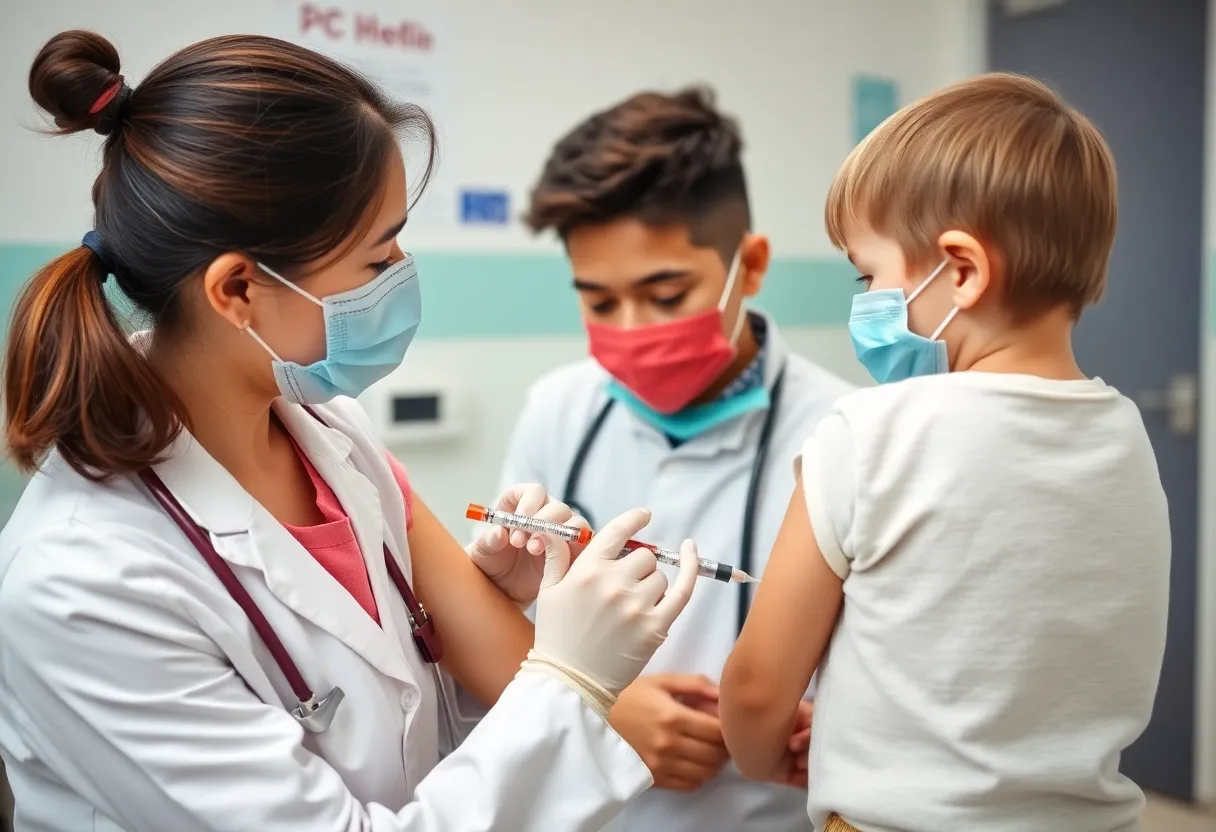
Health officials emphasize that vaccination is the most effective means to prevent whooping cough. Vaccines are administered as part of the routine childhood immunization schedule and are available for eligible children through the Vaccines for Children (VFC) program, ensuring that those whose families may not be able to afford vaccinations still have access.
In addition to vaccination, health experts recommend practicing good hygiene. Staying home when feeling ill can also reduce the spread of the illness. These preventative measures are vital in mitigating the incidence of whooping cough in communities.
Fluctuations in Pertussis Cases
According to the South Carolina Department of Health and Environmental Control (DHEC), fluctuations in whooping cough cases are not uncommon, with numbers varying from low to high across different years. Public health officials are monitoring the situation closely to ensure that awareness and preventative measures remain in place.
As the state continues to navigate this surge in cases, community awareness about the importance of vaccination and hygiene practices remains crucial in controlling the spread of whooping cough. Individuals are encouraged to stay informed and proactive in protecting themselves and their loved ones.
Deeper Dive: News & Info About This Topic
HERE Resources
Additional Resources
- WYFF4: South Carolina Whooping Cough Cases Rise
- Wikipedia: Pertussis
- WBTW: South Carolina County Confirms 8th Active Case of Whooping Cough
- Google Search: Whooping Cough Prevention
- The State: Whooping Cough in South Carolina
- Encyclopedia Britannica: Whooping Cough
- Greenville Online: How to Prevent the Spread of Whooping Cough in South Carolina
- Google News: Whooping Cough Cases