

News Summary
The spotted lanternfly, an invasive species originally from Asia, has been detected in South Carolina, prompting concerns for the state’s agriculture. Confirmed by the Clemson Extension Service in Greenville and Seneca, the insect poses significant threats to crops such as grapes and hops. State officials are collaborating with various agencies to monitor the spread and urge residents to report sightings. Early detection is critical to mitigating economic impacts as the pest continues to spread across the United States.
Greenville, South Carolina – A new invasive species, the spotted lanternfly (Lycorma delicatula), has been identified in South Carolina for the first time, raising significant concerns for the state’s agricultural and forestry sectors. The Clemson Extension Service confirmed sightings of the pest in the Greenville and Seneca areas, prompting officials to take immediate action.
The spotted lanternfly is originally from Asia and first made its appearance in the United States in Pennsylvania in 2014. Since then, it has spread to at least 18 other states, including neighboring regions such as North Carolina, Tennessee, and Georgia. Experts from Clemson University noted that the arrival of the species in South Carolina was “somewhat inevitable,” given its proximity to states where it had already been detected.
The insects are adept at spreading by hitching rides on vehicles, shipping containers, pallets, and other means of transport. These methods underscore the importance of thorough inspections of items entering the state to prevent the pest’s further spread. While the spotted lanternfly does not pose a direct threat to humans and animals, it presents a significant risk to various agricultural industries in South Carolina.
Potential Economic Impact
The spotted lanternfly is known to damage a variety of crops, including grapes, hops, stone fruits, and hardwood trees. Its presence could have detrimental effects on the wine, fruit, and ornamental plant industries in the region, which are substantial contributors to the economy. Experts emphasize that early detection and public reporting of sightings are crucial in mitigating potential economic losses.
Identification and Signs
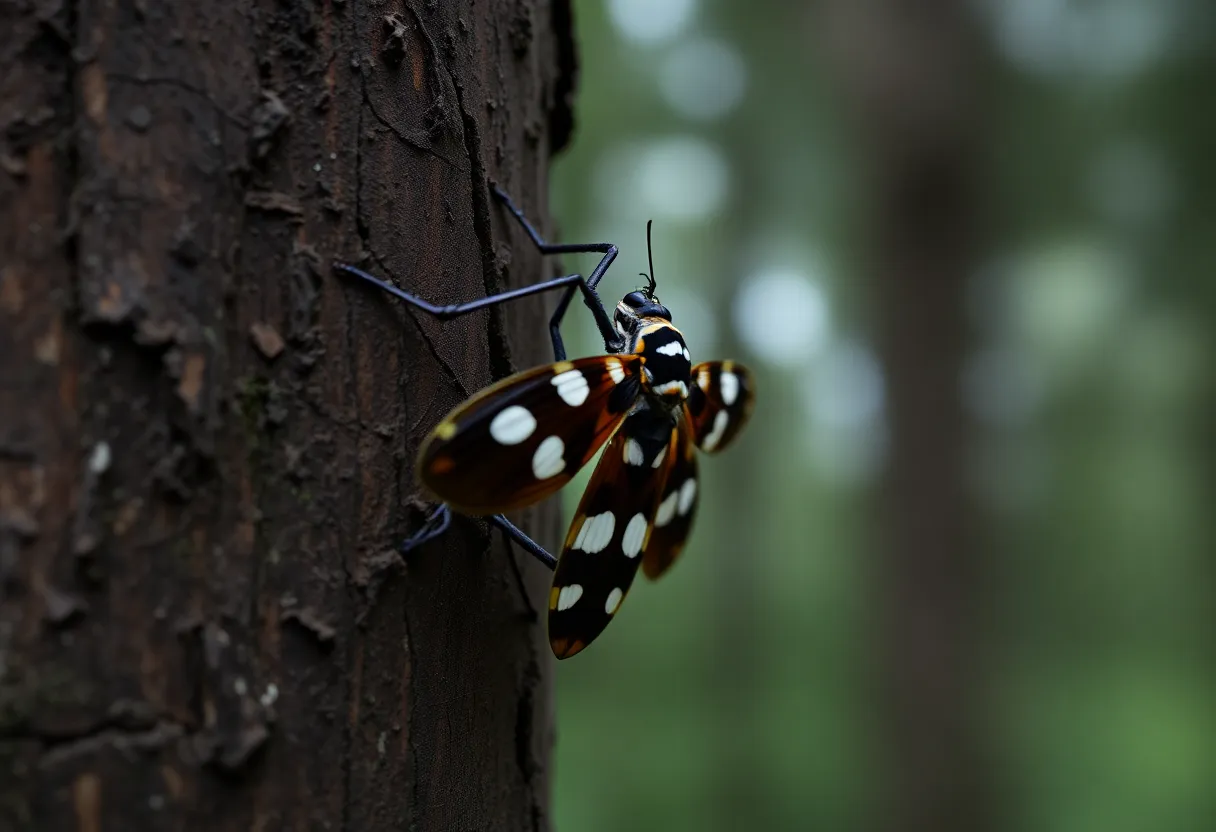
Residents and visitors in South Carolina are encouraged to familiarize themselves with the identification markers of the spotted lanternfly to assist in effective reporting. The nymphs, which are the young forms of the insect, begin as black with white spots and transition to a bright red coloration as they mature. The adults measure around one inch long and half an inch wide, featuring grayish-brown wings adorned with black spots and striking scarlet back wings characterized by black and white bars.
One notable sign of the spotted lanternfly is its egg masses, which can resemble wet gray putty or dried mud. These egg masses can be found on various surfaces, including tree trunks, bricks, and vehicles. Additionally, the insect excretes a sticky substance known as “honeydew,” which can lead to mold growth, attract other insects, and emit a foul odor as it breaks down.
Cooperative Efforts in Monitoring
The Clemson Extension is actively collaborating with state, local, and federal agencies, including the USDA’s Animal and Plant Health Inspection Service (APHIS), to monitor and control the spread of the spotted lanternfly. State officials are likely to seek access to private properties to conduct surveillance and necessary treatment of the pest, underlining the need for cooperative management efforts.
Call to Action
As the vigilance against the spread of the spotted lanternfly continues, it is essential for South Carolina residents and visitors to report any sightings promptly. More information on how to identify and report the spotted lanternfly can be found on the Clemson invasive species website. Public participation is vital in helping to contain this growing threat and protect the state’s agricultural industries from potential harm.
Deeper Dive: News & Info About This Topic
HERE Resources
Invasive Species Threaten South Carolina’s Wildlife and Ecosystems
Additional Resources
- Fox Carolina: Invasive Spotted Lanternfly Detected in South Carolina
- WLTX: Spotted Lanternfly in South Carolina
- WRDW: Crop-Threatening Pest Spreads in South Carolina
- Post and Courier: Spotted Lanternfly Invasive Species in SC
- Wikipedia: Lycorma delicatula
- Google Search: Spotted Lanternfly