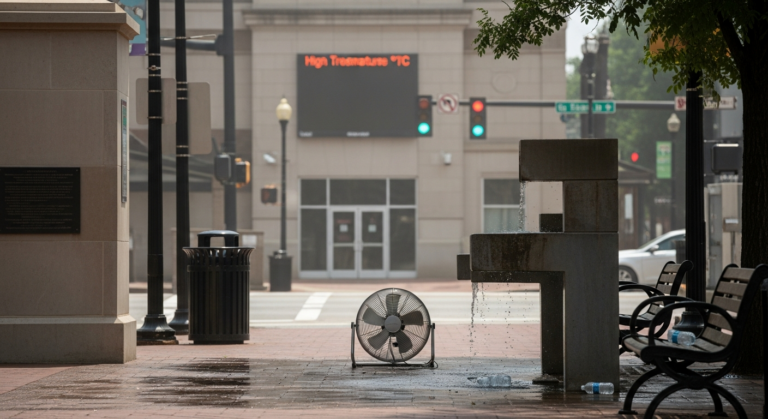
As summer continues, medical professionals in Greenville are observing a consistent pattern of heat-related illnesses presenting at local emergency departments. Conditions ranging from heat cramps and heat rash to more severe heat exhaustion and life-threatening heat stroke are increasingly common during periods of elevated temperatures and humidity.
Studies have consistently documented a rise in emergency department visits and hospital admissions for dehydration, electrolyte imbalances, and other heat-related conditions when the region experiences high heat. This trend places a predictable strain on healthcare infrastructure, including major providers such as Prisma Health and Bon Secours St. Francis, which serve the Greenville area. The influx of patients with these conditions necessitates increased resource allocation and specialized care, particularly during peak heat events.
Heat cramps, often the mildest form of heat illness, manifest as painful muscle spasms, typically in the abdomen, arms, or legs. Heat rash, characterized by small red spots, occurs when sweat ducts become blocked. More serious is heat exhaustion, which can present with heavy sweating, weakness, cold or clammy skin, a fast and weak pulse, nausea, vomiting, and fainting. Without intervention, heat exhaustion can progress to heat stroke, a medical emergency.
Heat stroke represents the most severe form of heat-related illness, occurring when the body’s core temperature rises to dangerous levels, typically around 103° to 104 °F (39.4° to 40 °C). Normal core body temperature is usually maintained around 98.6 °F (37 °C). The body’s inability to regulate its temperature effectively during heat stroke can lead to a cascade of severe symptoms, including hot or flushed skin, a fast heart rate, headache, nausea, dizziness, confusion, and even loss of consciousness. This critical elevation in body temperature can cause permanent disability or death if not treated promptly.
Certain populations are at a significantly higher risk for developing heat-related illnesses. This includes the very young, whose thermoregulatory systems are not fully developed, and the very old, who may have underlying health conditions, take medications that impair heat regulation, or have reduced awareness of thirst. Individuals engaged in prolonged exertional outdoor work, such as construction workers or landscapers in Greenville, are also highly vulnerable due to continuous exposure and physical exertion. Similarly, intense athletes, including those training at institutions like Furman University or North Greenville University, face elevated risks during rigorous summer workouts.
Accurate measurement of core body temperature is crucial in diagnosing and managing severe heat-related conditions. While oral, axillary (underarm), and tympanic (ear) temperature measurements are common for general health monitoring, they can be inaccurate in situations of severe overheating. For precise assessment in cases of suspected heat stroke, medical guidelines recommend rectal temperature measurement, providing the most reliable indicator of the body’s internal temperature.
Dehydration, a precursor to many heat-related illnesses, is characterized by a lack of sufficient fluid in the body. Early signs include thirst, dizziness, and fatigue. A practical indicator for individuals to monitor their hydration status is urine color; heat-related dehydration often results in less urine that is darker than normal. Healthy hydration is generally indicated by light yellow urine produced in normal amounts. Recognizing these early signs and taking corrective action, such as increasing fluid intake, can prevent the progression to more severe conditions.
Why it matters in Greenville
The prevalence of heat-related illnesses during the summer months poses a significant public health challenge for Greenville. Local healthcare providers, including Prisma Health and Bon Secours St. Francis, are on heightened alert, preparing for and managing increased patient loads. The city’s diverse population, encompassing outdoor workers, elderly residents, and active youth participating in summer programs, means a broad segment of the community is susceptible. Understanding the symptoms, risk factors, and the critical importance of early intervention is vital for residents to navigate the warmer conditions safely and to alleviate potential strain on emergency services throughout Greenville.